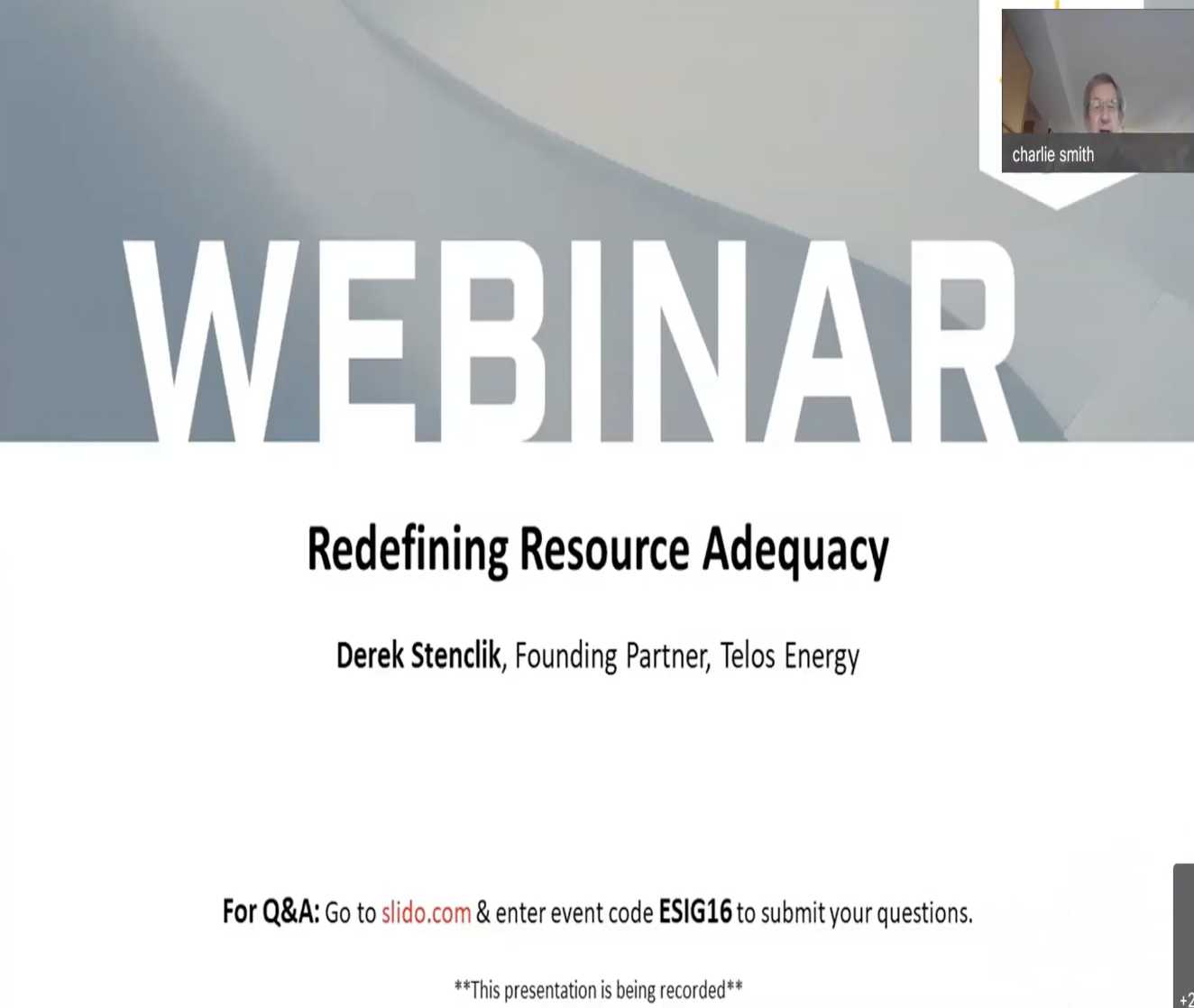
Overview Hosted by the Energy Systems Integration Group (ESIG) and presented by Derek Stenclik of Telos Energy, this webinar explores the evolving landscape of Resource Adequacy (RA) for modern power systems. Triggered by recent severe grid failures—such as the August 2020 rolling blackouts in California and the massive February 2021 winter storm in Texas—the presentation outlines the limitations of traditional RA paradigms and proposes new principles, metrics, and modeling approaches necessary for a clean energy transition.
Key Findings
Shifting Reliability Risks: Grid shortfalls are no longer uniform events. While historical risks were concentrated during summer gross peak loads, modern risks are shifting to "net peak" hours (e.g., summer evenings after solar generation declines) and extreme winter periods (e.g., multi-day cold snaps causing systemic thermal and gas supply failures).
Critical Gaps in Weather Modeling: Weather is the fundamental driving force for modern RA, heavily impacting both load and supply-side variable resources. However, current industry models lack comprehensive, chronologically correlated weather data that can accurately capture extreme, temperature-dependent thermal generator outages and cross-sector vulnerabilities on the natural gas network.
Evolving RA Metrics: A single reliability metric like the traditional Planning Reserve Margin (PRM) or the 1-day-in-10-years Loss of Load Expectation (LOLE) is no longer sufficient to assess system risk. Planners must adopt a complete suite of metrics—specifically Expected Unserved Energy (EUE) and Loss of Load Hours (LOLH)—to accurately quantify the size, frequency, duration, and timing of potential shortfalls.
Rethinking Capacity Accreditation: The traditional bridge between RA analysis and resource procurement, which relies on PRM and Effective Load Carrying Capability (ELCC), is eroding. The marginal capacity value of resources is becoming exceedingly difficult to predict due to "saturation effects" (where capacity value declines as a single resource type scales) and complex "portfolio effects" (synergistic benefits between resources, such as solar extending the value of battery storage).
Conclusion To ensure reliability during the energy transition, the power sector must move beyond simplistic planning reserve margins. Success requires establishing multi-metric reliability criteria, enhancing cross-disciplinary weather modeling to capture highly correlated extreme events, and developing new capacity accreditation alternatives to accurately reflect the true value of diverse resource portfolios.



Write a comment
Các trường bắt buộc được đánh dấu *