About CAISO : Link
BATTERY ENERGY STORAGE SYSTEM (BESS) OPERATIONAL REPORT - CAISO MARKET
Report Date: Thursday, March 26, 2026
1. Total Capacity and State of Charge (SoC)
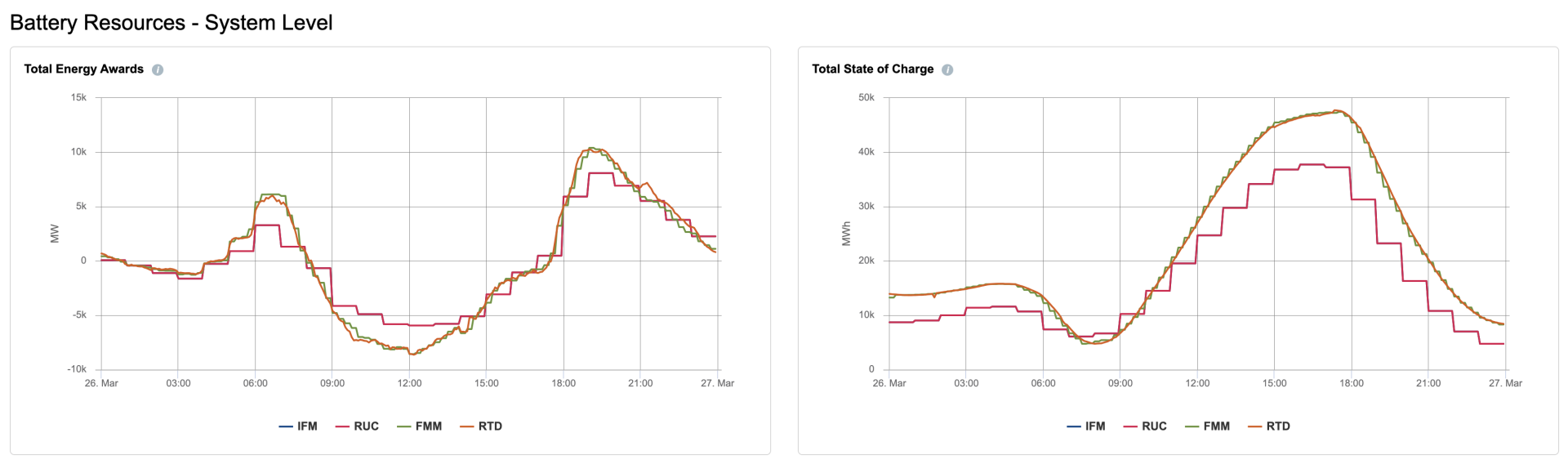
- Storage Capacity: The total energy stored in the system (State of Charge) peaked during the late afternoon, approaching 50,000 MWh (50 GWh).
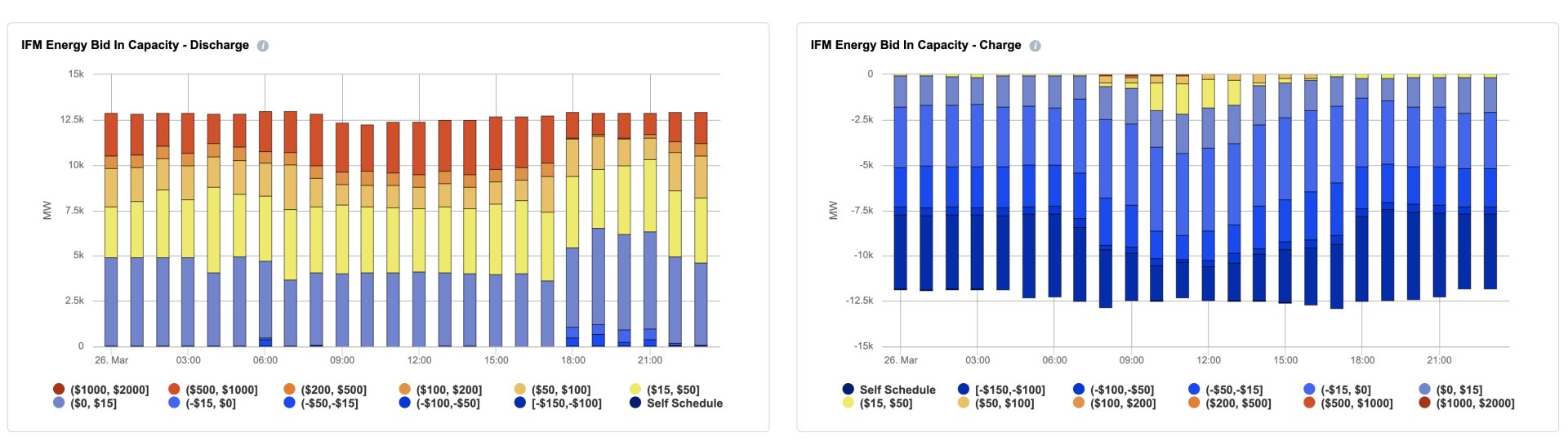
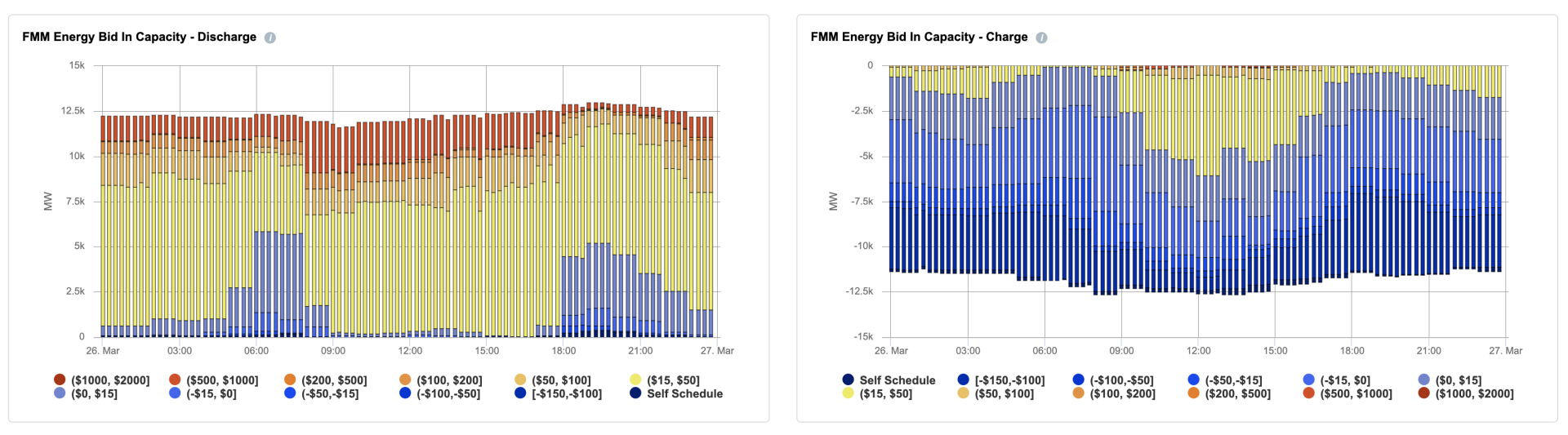
- Bid-in Capacity:
- Discharge Capacity: Battery resources submitted discharge bids of up to approximately 12,500 MW in the Integrated Forward Market (IFM) and Real-Time Market (FMM).
- Charge Capacity: The system also recorded equivalent charging capability, with maximum bids reaching about 12,500 MW during intervals characterized by low or negative electricity prices.
2. Operating Trends (Charging & Discharging Trends)
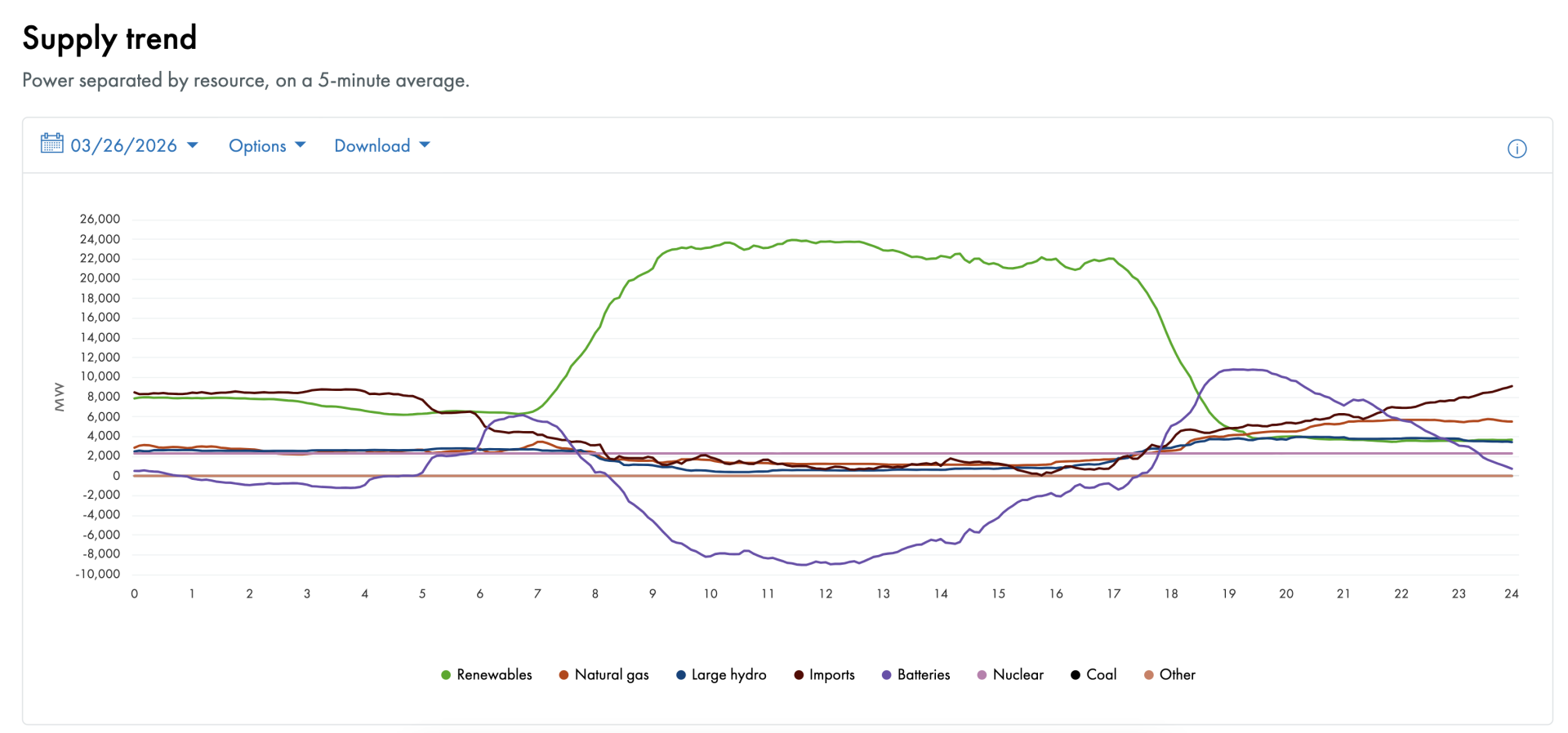
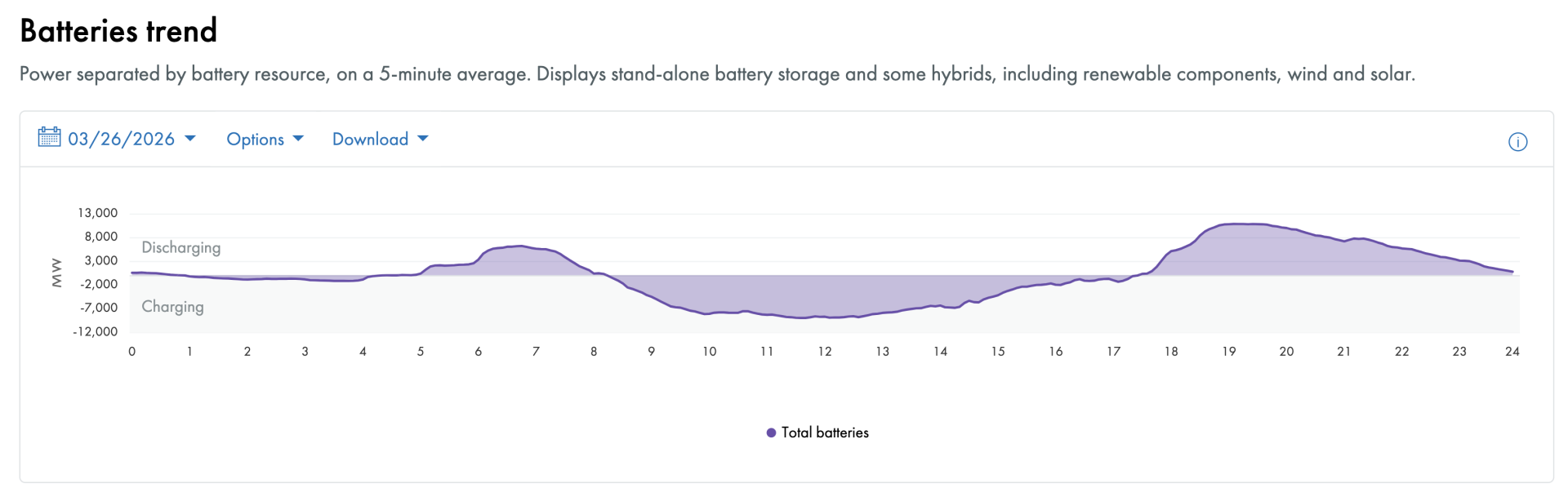
Chart data illustrates a characteristic operating cycle designed to address the "duck curve" of the California grid:
- Charging Phase: Heavily concentrated between 10:00 AM and 3:00 PM. This coincides with peak solar generation, during which batteries absorb excess energy to maintain grid stability.
- Discharging Phase: Commences acceleration after 6:00 PM (18:00) as solar output declines and evening peak demand rises. The BESS serves as a primary generation source to replace solar, effectively reducing reliance on expensive gas-fired peaking plants.
3. Participation in Ancillary Services (AS)
Battery storage systems continue to dominate ancillary service markets to ensure system frequency and security:
- Regulation: Batteries participate most actively in Regulation Up and Regulation Down services, demonstrating an extremely rapid response to short-term grid fluctuations.
- Spinning Reserves: A significant amount of capacity is maintained as Spinning Reserves to provide immediate contingency response for generation events on the system.
4. Market Trend Analysis
- Price Optimization: Bid-in capacity data indicates that BESS owners typically charge during low-price brackets (occasionally below $0/MWh) and discharge when market prices surge in the evening, optimizing profitability through arbitrage.
- System Impact: The presence of 12.5 GW of battery capacity has significantly contributed to flattening the evening peak and mitigating localized overloading caused by the intermittency of renewable energy sources.
Source: CAISO




Write a comment
Các trường bắt buộc được đánh dấu *