

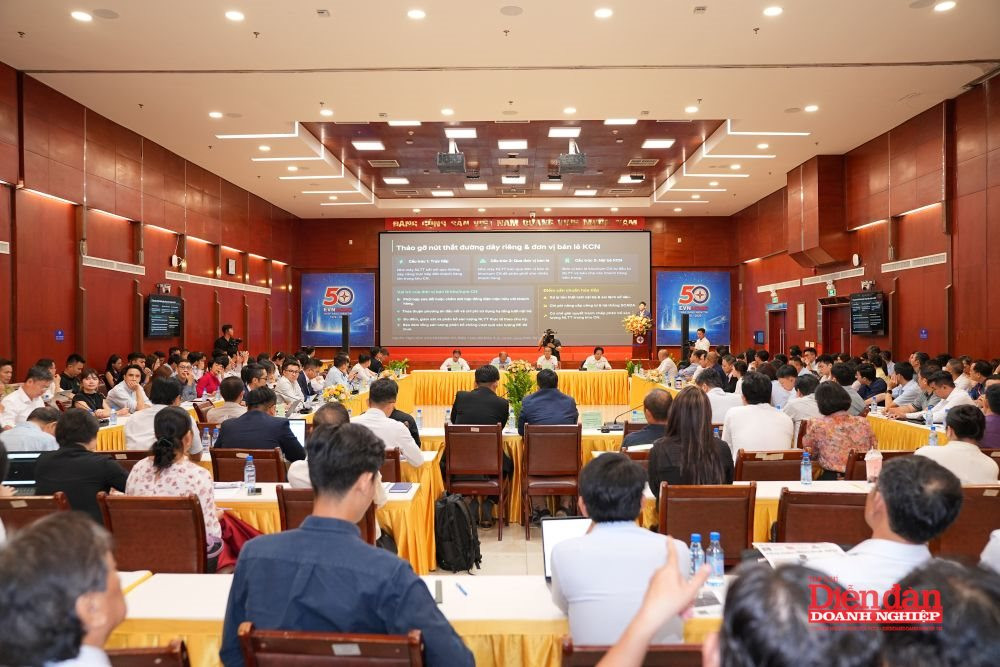
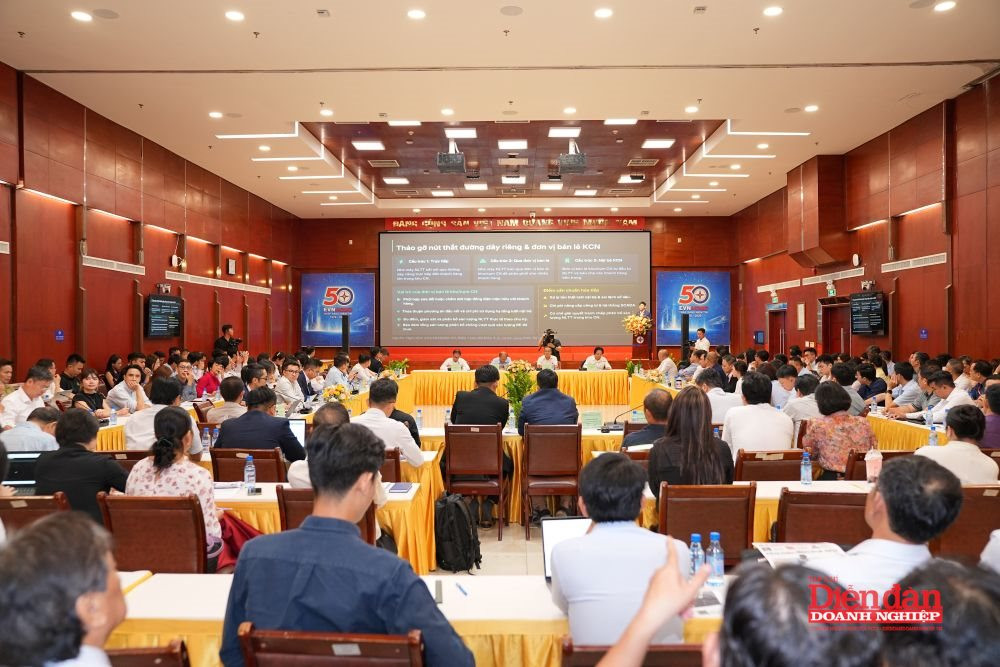
Overview of the Forum "Direct Power Purchase and Energy Storage Development: A Lever for Green Transition and Sustainable Development."
On the afternoon of August 13, under the direction of the Vietnam Chamber of Commerce and Industry (VCCI), Business Forum Magazine, in coordination with the Institute of Smart Energy Applications Research (iSEAR) and related agencies and units, organized the forum "Direct Power Purchase and Energy Storage Development: A Lever for Green Transition and Sustainable Development."
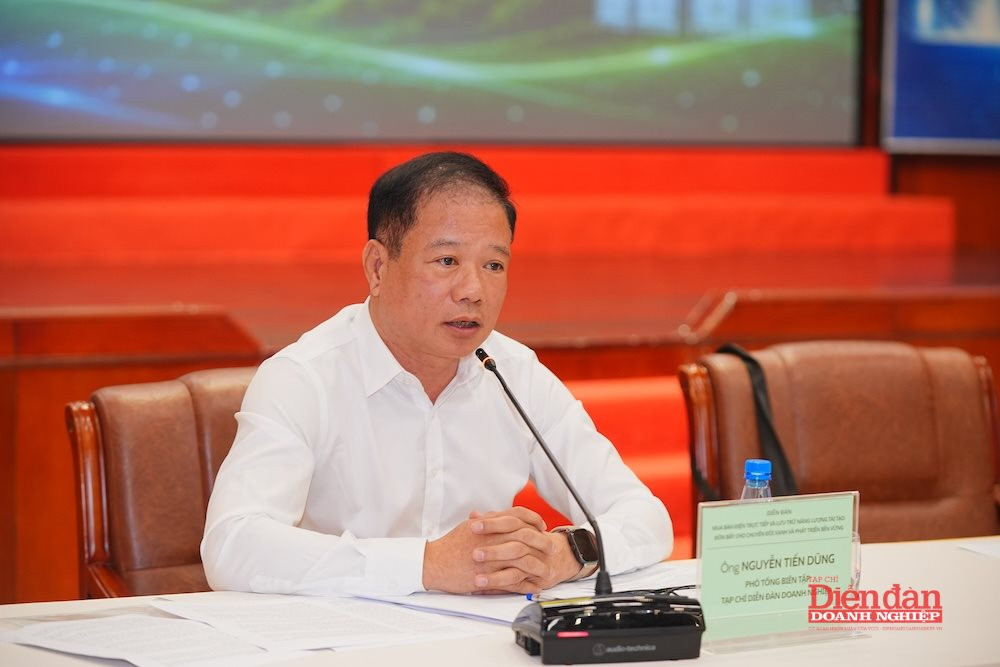
Journalist Nguyen Tien Dung, Deputy Editor in Chief of Business Forum Magazine, moderated the discussion session.
Under the moderation of Journalist Nguyen Tien Dung, Deputy Editor in Chief of Business Forum Magazine, the discussion session focused on clarifying new regulations on direct power purchase and renewable energy storage. The central goal was to consolidate practical input from enterprises in order to propose timely policy adjustments to the Government.
Mr. Nguyen Van Hoang, Vice Chairman of the Vietnam Textile and Apparel Association (VITAS), stated that the industry currently comprises around 7,000 enterprises, with export turnover reaching USD 46.2 billion in 2015 and targeting USD 48 billion in 2026. He emphasized that shifting to a green factory model is no longer an encouraged option but has become a mandatory requirement from international markets.
According to Mr. Hoang, although upfront investment costs increase, enterprises applying green models can recover their investment within three years through savings on electricity and water resources and optimized labor productivity.
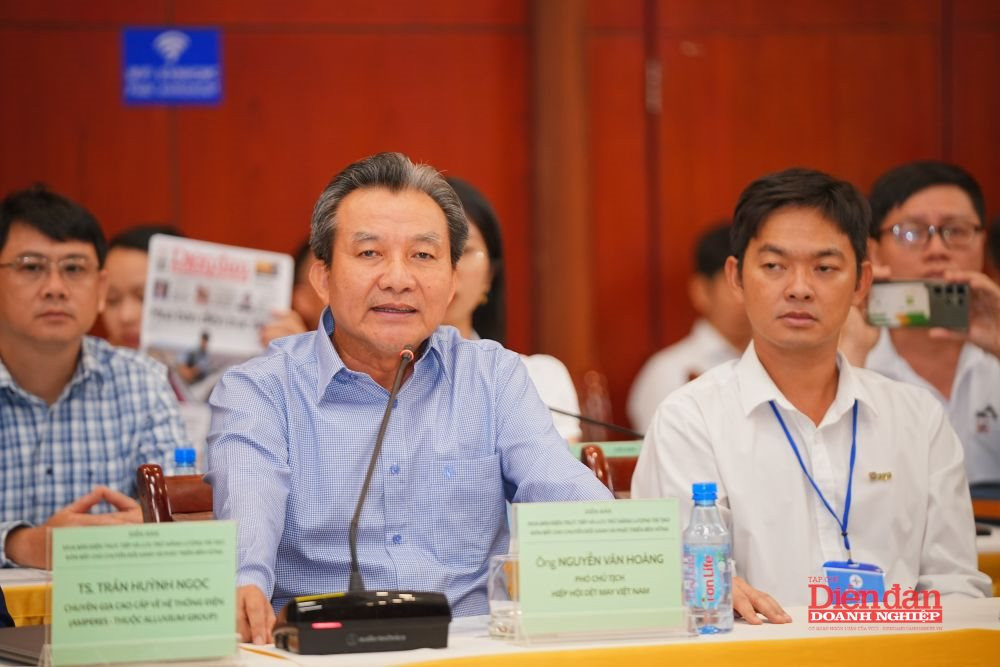
Mr. Nguyen Van Hoang - Vice Chairman, Vietnam Textile and Apparel Association.
The pace of clean energy investment has declined markedly since incentive policies for rooftop solar power were discontinued. At present, many self-generating, self-consuming enterprises are wasting surplus electricity output on non-operating days.
Mr. Hoang also raised obstacles within industrial zones. Many factories, notably at Amata Industrial Park, face difficulties because the infrastructure management unit operates its own dedicated power trading company and refuses to permit grid connection out of concern for grid safety. This forces enterprises to incur additional costs purchasing external emission reduction certificates to meet partner requirements.
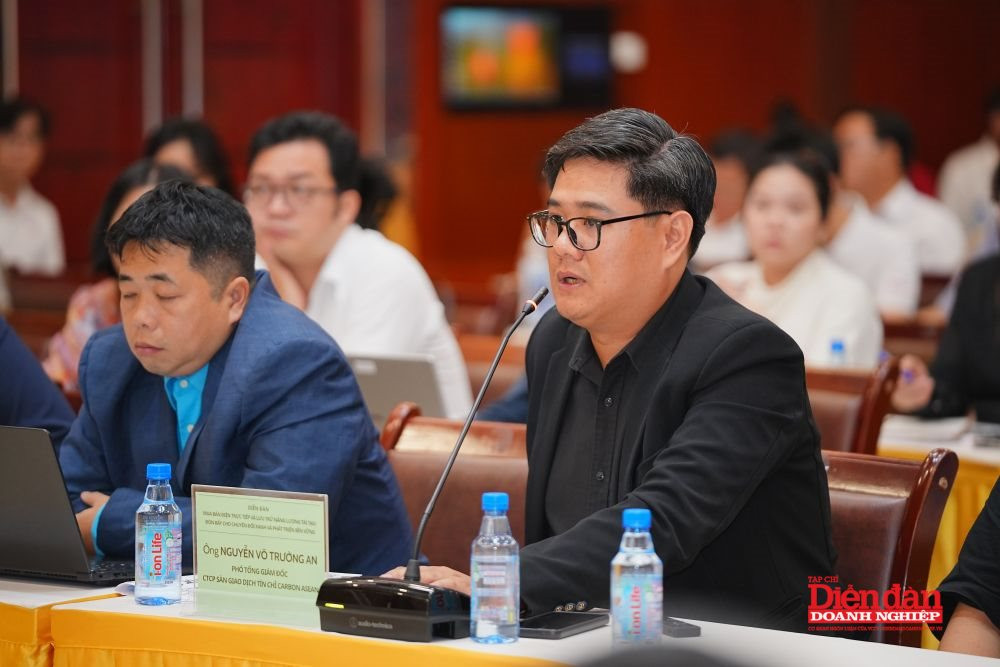
Mr. Nguyen Vo Truong An, General Director, ASEAN Carbon Credit Exchange JSC.
Assessing international trends, Mr. Nguyen Vo Truong An, General Director of ASEAN Carbon Credit Exchange JSC, noted that strict mechanisms such as the EU's CBAM (Carbon Border Adjustment Mechanism) and ETS (Emissions Trading System) now require actual evidence of carbon emission reductions. The use of I-REC (International Renewable Energy Certificate) energy attribute certificates for Scope 2 emissions is no longer accepted under CBAM; instead, the Direct Power Purchase Agreement (DPPA) mechanism must be mandatorily applied.
To address the situation in which sellers and buyers of renewable electricity have yet to "find each other," Mr. An recommended that Vietnam urgently establish a power exchange or digitalized energy trading exchange. Such an exchange would standardize pricing and manage contract types including Contracts for Difference (CfD), spot contracts, futures contracts, and storage services. This model would allow the market to operate transparently, fully digitalizing generation output and consumption data to protect all parties involved.
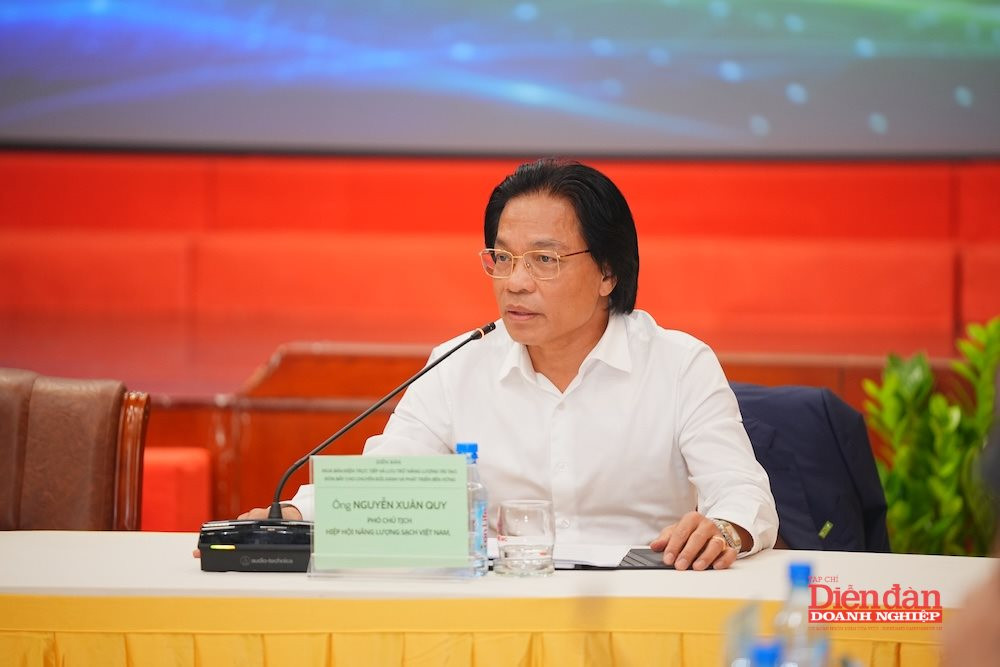
Mr. Nguyen Xuan Quy, Vice Chairman, Vietnam Clean Energy Association.
From the perspective of industry associations and experts, Mr. Nguyen Xuan Quy, Vice Chairman of the Vietnam Clean Energy Association, commended Decree 243/2026/ND-CP for raising the surplus electricity sale ratio to 50 percent and expanding the pool of eligible retail sellers.
Even so, he identified three major obstacles constraining the DPPA mechanism via the national grid. First, renewable energy output is difficult to forecast. Second, transmission, distribution, dispatch, and loss costs have not been published on a long-term basis, leaving enterprises and banks unable to project cash flows over a 15 to 20 year horizon, which creates significant difficulty in raising international capital. Third, transmission infrastructure in high-potential regions such as the South Central Coast and the Central Highlands is overloaded, while consumption demand is concentrated in the North and the Southeast region.
Mr. Quy stressed that the absence of internationally standardized template contracts also extends project development timelines to three to five years. He expressed regret over the surplus electricity wasted during non-operating days at textile factories.
According to Mr. Bui Trung Kien, Deputy General Director of Ho Chi Minh City Power Corporation (EVNHCMC), the private transmission line model is developing well, with 14 systems in Ho Chi Minh City totaling 60 MW in combined capacity. At the same time, the city has more than 5,000 customers registered for self-generated, self-consumed solar power installations with a combined capacity exceeding 500 MW. He affirmed that current transmission and distribution costs are accounted for, reviewed annually, and fully transparent.
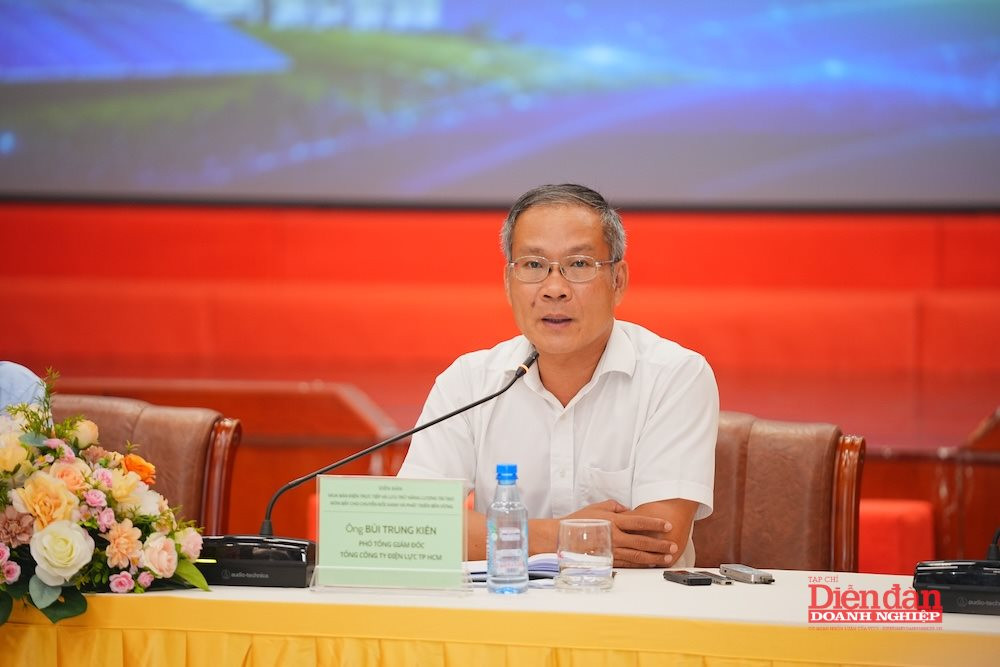
Mr. Bui Trung Kien - Deputy General Director, Ho Chi Minh City Power Corporation (EVNHCMC).
On the surplus electricity sale mechanism, Mr. Kien acknowledged that enterprise demand is very high, but Ho Chi Minh City has not yet recorded a successful registration case, as the practical procedure remains new. EVNHCMC is coordinating pilot testing of surplus electricity purchase procedures with a number of enterprises to standardize the process, with finalization and broad dissemination expected within August. He advised investors to clearly define the primary purpose of self-generated, self-consumed solar power as on-site self-consumption, avoiding over-investment.
From an expert standpoint, Mr. Phan Cong Tien, Director of the Institute of Smart Energy Applications Research (iSEAR), presented an analysis of solutions for untangling bottlenecks in the DPPA mechanism. Regarding the grid connection obstacle at Amata Industrial Park, where a customer was denied connection permission by the industrial park operator, he noted that Decree 243 clearly stipulates the principle of open grid access rights for customers, requiring cluster retail units and infrastructure management units to permit connection and respond in writing within 7 days, under the supervision of the Provincial People's Committee (Department of Industry and Trade).
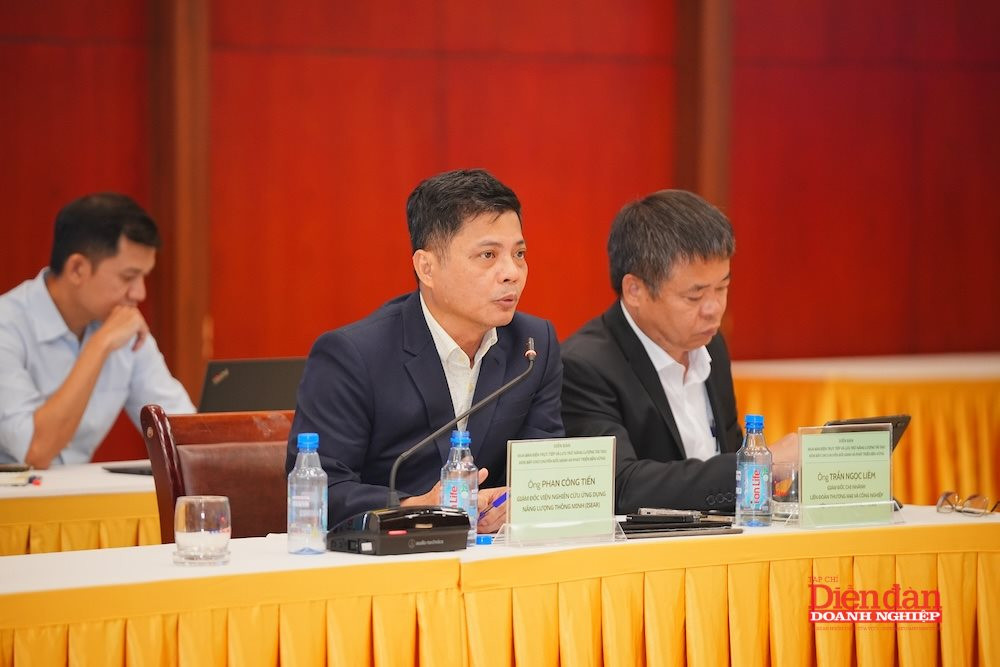
Mr. Phan Cong Tien - Director, Institute of Smart Energy Applications Research (iSEAR).
Looking further ahead, to resolve conflicts of interest between customers and internal industrial park grid investors, Mr. Tien recommended that the Ministry of Industry and Trade promptly issue detailed guidance on calculating internal electricity distribution fees, to serve as the basis for applying reasonable distribution grid cost payments, as stipulated under Electricity Law No. 61/2024.
He further assessed that the DPPA model via the national grid faces difficulty because green electricity prices bear additional transmission and distribution fees, which reduces competitiveness.
The expert proposed exempting transmission grid fees for renewable energy projects under 30 MW traded directly between suppliers and customers within the same province or city, since in such cases the power plant feeds only into the local distribution grid and is consumed on-site, with power flow never passing through the national transmission grid.
The combination of completing the legal framework, resolving infrastructure bottlenecks, and applying energy storage technology (BESS) is expected to help unlock green capital flows, creating momentum for Vietnamese exporting enterprises to develop sustainably.
Source: Business Forum Magazine

Write a comment
Các trường bắt buộc được đánh dấu *