

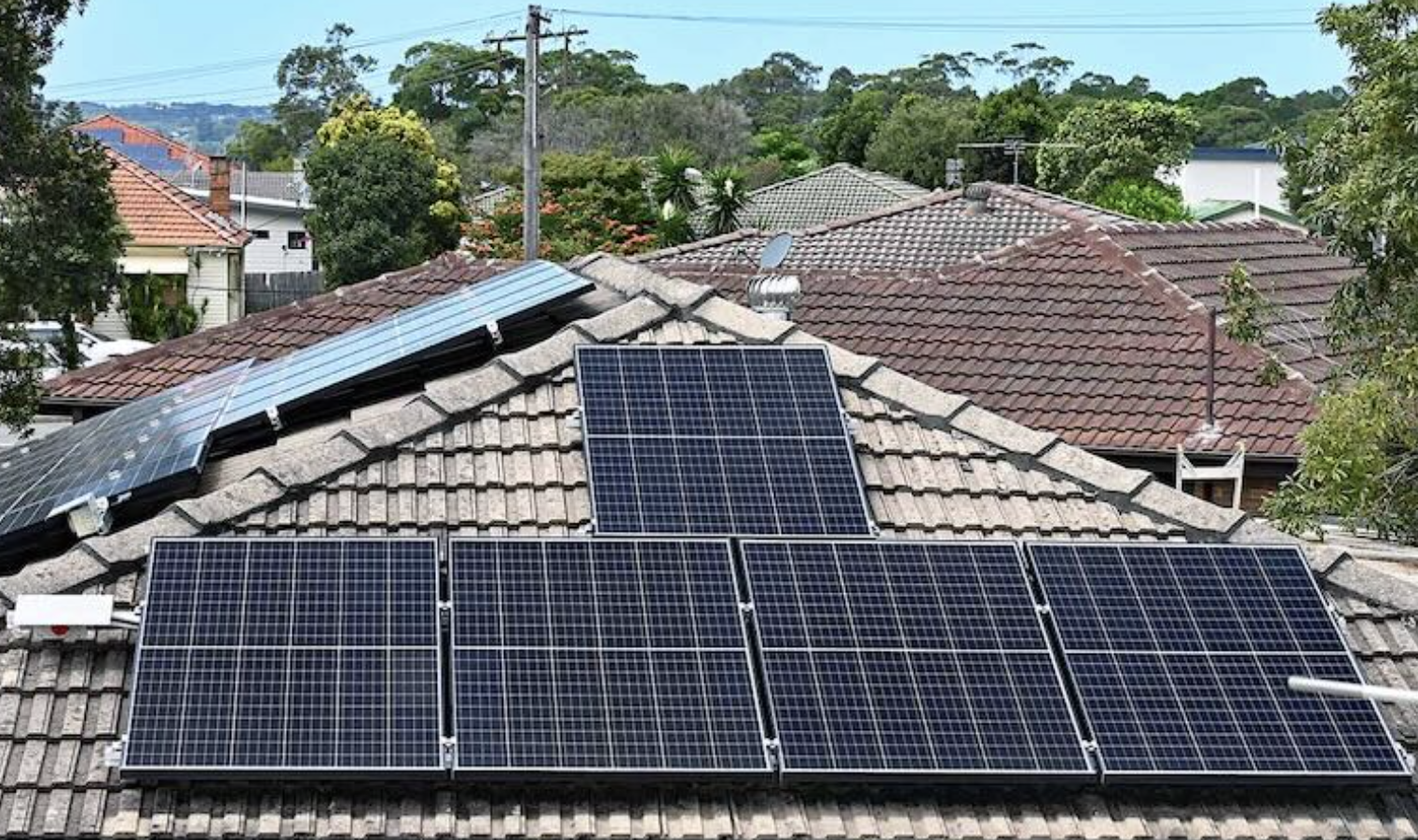

New Zealanders who export their rooftop solar generated electricity into the grid at times of peak demand are now being rewarded for their services through new tariffs paid by distribution network companies.
New rules that came into force on April 1 mean DNSPs have to pay small-scale exporters for their help in meeting demand at peak times, in addition to offering feed-in tariffs at other times of the day.
The rebate, which is paid to electricity retailers to pass through to their customers – either as a “buy-back” rate or bill credit – applies to households and businesses up to an export limit of 45 kilowatts (kW).
Current rates reported by New Zealand media outlet RNZ show distributors are offering rates between 5.24 NZ cents and 13 NZ cents (4.3 Australian cents to 13 cents) during the 7am to 11am morning peak and from 5pm to 8pm in the evening.
“The rebate recognises that electricity supplied when demand peaks can reduce pressure on the network, which over time, can save lines companies money,” Electricity Authority documents say.
The “regulatory intent” is hard to miss, says distributed energy resources (DER) consultant Gabrielle Kuiper, and is in stark contrast to Australia’s own mixed bad of efforts to integrate DER.
“NZ is codifying export as a paid flexibility service at both distribution and system levels,” Kuiper said on LinkedIn on Tuesday.
“The AEMC is exploring a model where a larger share of network revenue is recovered via fixed charges, diluting the economic signal for DER investment and operation even if some dynamic price elements remain.”
The new rules for Aotearoa came out of a consultation process, last year, as a “first step in our staged approach to ensure the pricing rules maximise the benefits of distributed generation so New Zealanders benefit.”
The distribution rebate is paired with a mandate that large retailers must lead the way in tariff reform by paying “fair” rates for exports by July 1, or face more regulation.
The fair pay for solar effort is part of a requirement that retailers offer time-of-use plans, a form of tariff well known in Australia but still little used in New Zealand, to give people more choice.
Regulator encourages, not punishes
New Zealand has been slow to embrace rooftop solar because, without the impetus of government-funded subsidies such as have driven world-leading uptake in Australia, it remains an expensive investment for most households.
According to the Electricity Authority, New Zealand currently has 75,000 households with solar systems on their roofs and 14,700 who have batteries.
Ministry of Business, Innovation and Employment (MBIE) advice to the government last year said it’s the cheapest form of energy available to households, but the upfront cost – from $NZ8500 ($A7,000) for a mini 3 kW system – is putting people off, according to documents recently uncovered by RNZ.
The government turned down the option of introducing Australia-like subsidies, offering instead building permit-free installations and the expansion of export limits.
Without incentives in place to lower the up front cost, it’s up to innovations by New Zealand’s regulator to convince kiwis the starting price is worth it.
On this front, the NZ Electricity Authority is proving to be relatively progressive with reforms designed to encourage effective integration of DER that boosts its value, both to customers as well as to the grid.
This has included the recent confirmation of new rules that large retailers (those with 5 per cent or more market share) have to offer a pricing plan that gives consumers cheaper rates for off-peak electricity.
“This means we expect ‘time-of-use’ plans will be available to most New Zealanders by 1 July 2026,” the Electricity Authority says.
This week, the Electricity Authority also doubled the kilowatt hour (kWh) export limit for rooftop solar from 5 kWh to 10 kWh – or higher, if the local network allows – with the new “flexible limit” to come in from May.
Tim Sparks, a manager at the Electricity Authority, says the limit was lower than it needed to be and meant that, at times, New Zealanders were paying for higher-cost electricity when cheaper rooftop solar was available.
“We’re also allowing lines companies to offer a dynamic or flexible export limit for residential connections, as an alternative to the fixed 10kW limit,” Sparks said in a statement.
“Lines companies will be able to flex above or below the 10 kW as conditions on the network change.
“This flexible approach future-proofs regulations. It opens the door to adopting smarter, more flexible technologies in the future, including vehicle-to-grid charging that returns electricity to the network from EV batteries.”
Sparks says the decision on export limits is the “first part of stage two of the Authority’s broader Network connections project that is making distribution networks more efficient, lowering costs for consumers and improving the security and resilience of the electricity supply.”
Future work, he adds, will consider reforms to the application processes for rooftop solar, rules to enable plug-in solar (‘balcony solar’) and the fees paid for processing applications to connect to the network.
New Zealand’s electricity situation has been dire.
In winter 2024, a “perfect storm” of high demand, low wind generation, low hydro dams due to drought, and limited gas to lean on sent wholesale prices skyrocketing as the country teetered on the brink of not having enough electricity.
In 2025, the MBIE estimated demand growth around 2 per cent a year until 2050 as households embrace electric vehicles and industry electrifies their operations and wean off expensive coal and gas.
The country’s connection pipeline currently stands at 11.2 gigawatt (GW) of solar and 7.7 GW of batteries which are rushing to fill supply gaps, but big energy users are still restricted in their electrification efforts due to a lack of electricity.

Write a comment
Các trường bắt buộc được đánh dấu *