



The electricity distribution sector is at a pivotal crossroad, driven by decentralisation, digitalisation, and decarbonisation. Decentralisation spreads generation across rooftops, communities, and microgrids, challenging the role of centralised power plants. Digitalisation adds real-time data and intelligent coordination, while decarbonisation shifts to low-emission sources, reshaping energy flows from producers to users.
This transformation redefines roles whereby passive consumers become active participants who generate, store, trade, and optimise energy. They introduce flexibility, responsiveness, and bi-directional flows into the grid. This article explores how customer empowerment reshapes Distribution System Operators' (DSOs) roles, responsibilities, and interfaces, revealing strategies for DSOs to thrive while ensuring grid reliability, equity, and innovation.
Customer empowerment grants users’ access, choice, participation, and control over energy interactions. Access opens grid services like injecting surplus generation or participating in ancillary markets. Choice allows for the selection of tariffs, partners, or energy mixes. Participation shapes their operations via feedback or aggregated flexibility. Whilst controllability enables the prosumer to manage consumption, production, or storage of energy, for cost and reliability optimisation. Users evolve from bill-paying endpoints to becoming grid stabilisers.
Empowerment varies by segment: residential users favour time-of-use rates or rooftop credits; commercial ones seek demand-response programs; industrial customers need load control; data centres require flexible power interfaces. It spans technical (connectivity), commercial (pricing, contracts), and informational (data transparency) dimensions. DSOs must tailor these to unlock value without risking the integrity of the grid
Traditional DSOs focused on assets like transformers and lines for one-way flows to passive users, with minimal customer interaction beyond the regular billing cycle. This suited predictable demand but faltered amid the emergence of decentralised resources and shifting usage patterns and the adoption of distributed generation.
Modern DSOs manage bi-directional flows from distributed energy resources (DER), storage, EVs, and flexible demand. They require advanced monitoring, forecasting, and control for stability. DSOs now act as neutral market facilitators, coordinating flexibility, energy trading, and ancillary services for resilience and efficiency. Figure 1 illustrates this evolution in the distribution business.
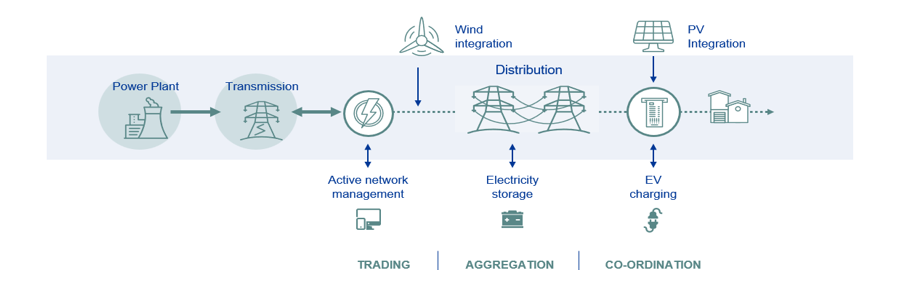
Figure 1 - The new DSO role
DSOs bridge grid and prosumers via technical, operational, and digital interfaces.
Technical Interfaces set connection rules: grid codes ensure safe links; hosting capacity assessments gauge accommodation limits; transparency tools provide capacity insights for planning.
Operational Interfaces handle reliability: outage communication, service metrics, flexibility dispatch for batteries or demand response during peaks.
Digital Interfaces enable data-driven efficiency: smart metering for usage visibility; portals and APIs for self-service applications and integration.
DSOs deploy enablers like digitalisation for data transparency on grid metrics; advanced metering for real-time insights; standardised protocols for interoperability; regulations mandating open access and streamlined processes; and dynamic tariffs reflecting grid conditions to incentivise behaviours.
These transform prosumers into partners, enhancing efficiency of the grid whilst providing the prosumer with a suite of benefits.
Customers contribute to the requirements of flexible operations of the DSO via demand-side interventions (by shifting loads), generation and storage capabilities (by either injecting or absorbing power), and for aggregators, by pooling resources for dispatch. They may also assist the DSO to manage congestion and be involved with capacity auctions and reserves. Figure 2 shows these interface requirements for the new prosumer.
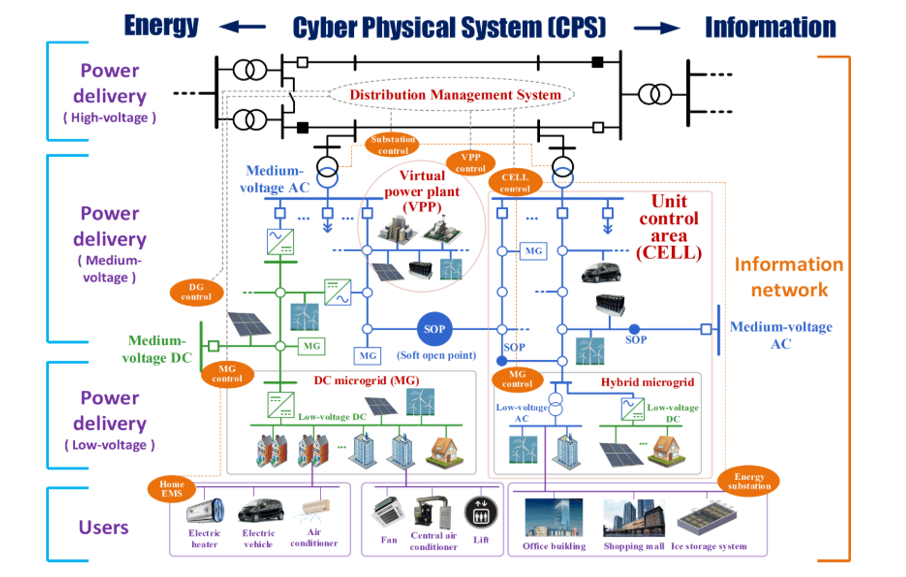 Figure 2 - Customer participation in the grid
Governance delineates roles. DSOs remain neutral by facilitating access without market distortion. Data ownership rests with customers via opt-in consent, where privacy follows data protection regulations, and where cybersecurity demands encryption and audits.
Regulators enforce unbundling, transparency, and incentives for participation. Oversight includes audits, sandboxes, and inclusivity to bridge digital divides, by balancing empowerment with neutrality and security.
Prosumers (producer-consumers) shift grids to becoming active networks. Benefits may include better utilisation of networks, thereby deferring investments. Resilience is improved via rapid responses from the distributed energy resources, thus creating higher prosumer satisfaction from the increased visibility and control that the DSO has of the grid.
Challenges may include increased coordination complexity, which is exacerbated by unequal capabilities of the distributed energy resources. Additional challenges include the provision of fair tariffs, which balance prosumer benefits whilst protecting non-prosumer costs and interests. Cyber risks may be managed via standardised interfaces, training, and incentives to ensure a safe grid.
Prosumers engage via aggregators in flexibility markets, primarily those that involve an offering of solar or batteries. European pilots as an example may enable household energy trading whilst in the US, programs coordinate EV charging. It has been learnt that transparent incentives boost participation by 40-60%. Modular, interoperable designs scale well, as is evident in Nordic collaborations between the DSO and prosumers. In such instances it has also been found that inclusive tools address digital divides.
Interactions between the customer and the DSO will be personalised via analytics for tailored recommendations. Large customers like data centres may provide grid-scale flexibility. Whilst the introduction of AI aids predictive engagement, it may also be used by the DSO to co-optimise planning integration preferences with energy and resource forecasts. This may defer investment in grid expansion requirements, whilst at the same time enhancing the resilience and reliability of the grid. It however remains paramount that the ethical use of data remains at the forefront of the engagement between the prosumer and the DSO.
Coordinated technical, regulatory, and digital development is essential to realize this vision, aligning incentives, standards, and ethical safeguards to ensure equitable access. Customer empowerment stands as the cornerstone of future distribution system design, enabling co-optimized planning that anticipates decentralized energy flows and fosters sustainable, customer-led grids.
Seamless DSO interfaces empower customers, yielding reliability, cost savings, and resource integration. This symbiosis builds trust, equity, and innovation. Evolving regulations will deepen participation, creating adaptive networks where DSOs and customers work together to provide a sustainable grid.
Looking ahead, this partnership will strengthen as regulatory frameworks evolve to prioritize customer-centric governance and data-sharing protocols. Expect expanded interfaces that enable initiative-taking participation in grid stability initiatives, from localized balancing to long-term planning. As global energy demands intensify, this growing integration promises a more adaptive, inclusive, and sustainable distribution landscape, where empowered customers and agile DSOs co-create the resilient networks of tomorrow.
Source: CIGRE

Write a comment
Các trường bắt buộc được đánh dấu *