

.png)
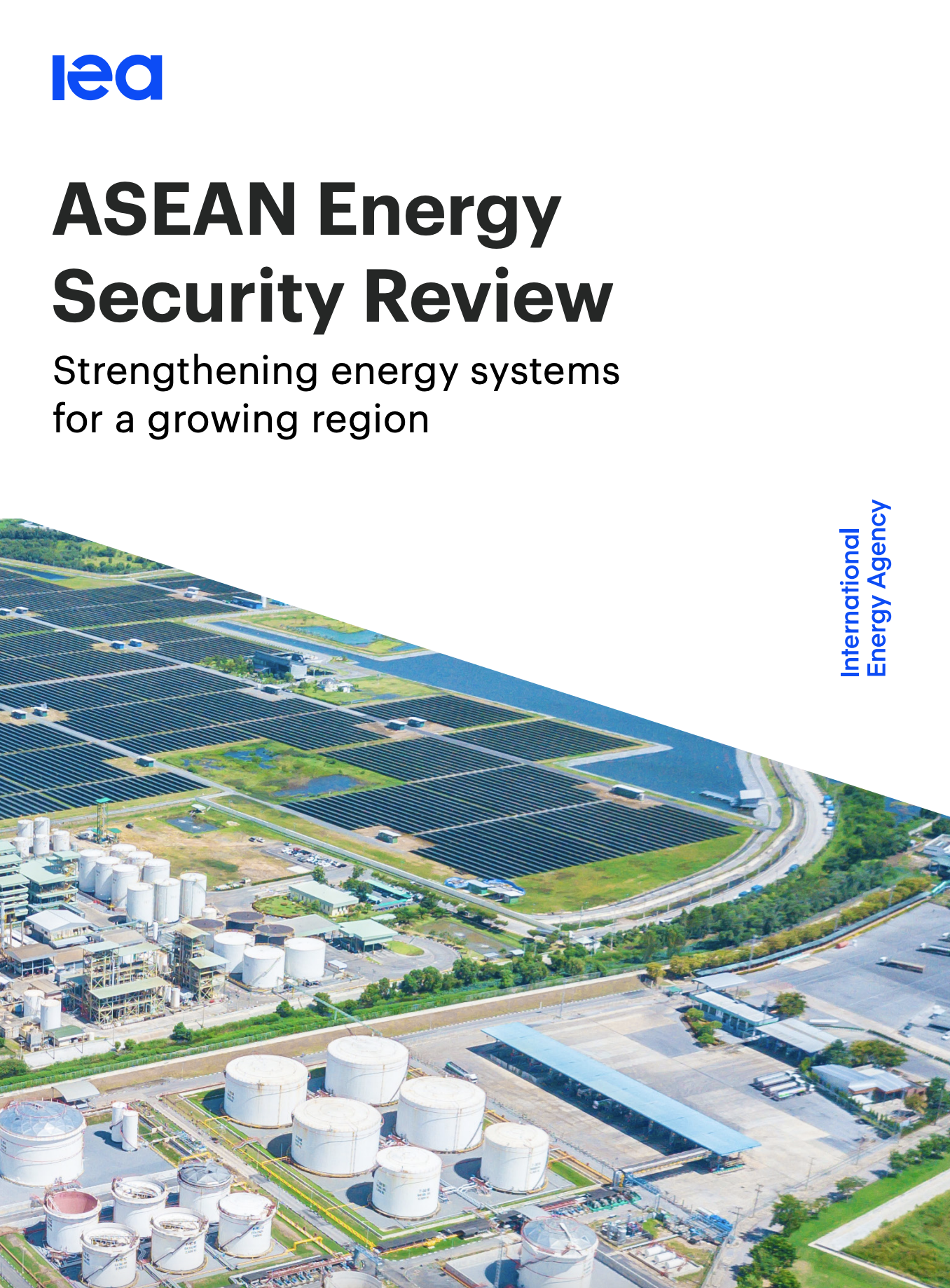
This report reviews ASEAN's energy security considerations and policy options as the region faces rapidly growing energy needs and an increasingly complex energy landscape. Energy security has long been an important priority for ASEAN member states, and its significance has grown alongside economic growth, industrial development, urbanisation and rising living standards, which have continued to drive strong growth in energy demand across the region. Southeast Asia is emerging as one of the main centres of energy demand growth globally. Energy systems remain highly diverse across ASEAN member states and continue to rely on a mix of domestic resources, regional trade and international imports. Ensuring a secure, affordable and sustainable energy supply is therefore essential not only for maintaining economic momentum and social development, but also for strengthening the region’s resilience to geopolitical shocks, volatile fuel prices, extreme weather events and the changing dynamics of global energy markets.
The region faces a broad set of interconnected energy security challenges, including rising dependence on imported oil and LNG, exposure to strategic maritime choke points, uneven preparedness for supply disruptions, the need to maintain reliable and affordable electricity systems, and emerging risks linked to clean energy supply chains and critical minerals. As the report shows, energy security will increasingly depend on diversified supply, greater use of domestic resources, and accelerated electrification and efficiency within an integrated, systems-based approach. Next to these policies, the report covers a wide range of additional options to address energy security challenges. These include expanding strategic stocks, investing in infrastructure, and improving demand-side flexibility; accelerating clean energy deployment where it reduces exposure to imported fuels; improving emergency planning and market monitoring; and deepening regional co‑operation through more effective mechanisms for information sharing, co‑ordinated response, cross-border infrastructure and collective preparedness. Taken together, these measures can help ASEAN manage near-term risks while building a more secure and flexible energy system for the longer term.
Download the full report at: ASEANEnergySecurityReview
Source: IEA

Write a comment
Các trường bắt buộc được đánh dấu *