


Electric utilities across the United States are experiencing a rapid expansion in electricity demand driven by data centers and AI-enabled computing. This growth is occurring on systems largely planned for very slow demand growth, creating new challenges for infrastructure planning, forecasting, and cost allocation. In response, utilities are developing and revising large load tariffs to recover customer-driven costs, manage uncertainty, and protect existing customers from cost shifts.
Large load tariffs link assumed load growth to infrastructure investment through mechanisms such as contract demand, minimum billing, and ramp-up provisions. However, tariff designs vary widely across utilities, regions, and market structures, making it difficult to compare customer costs or assess cost responsibility consistently.
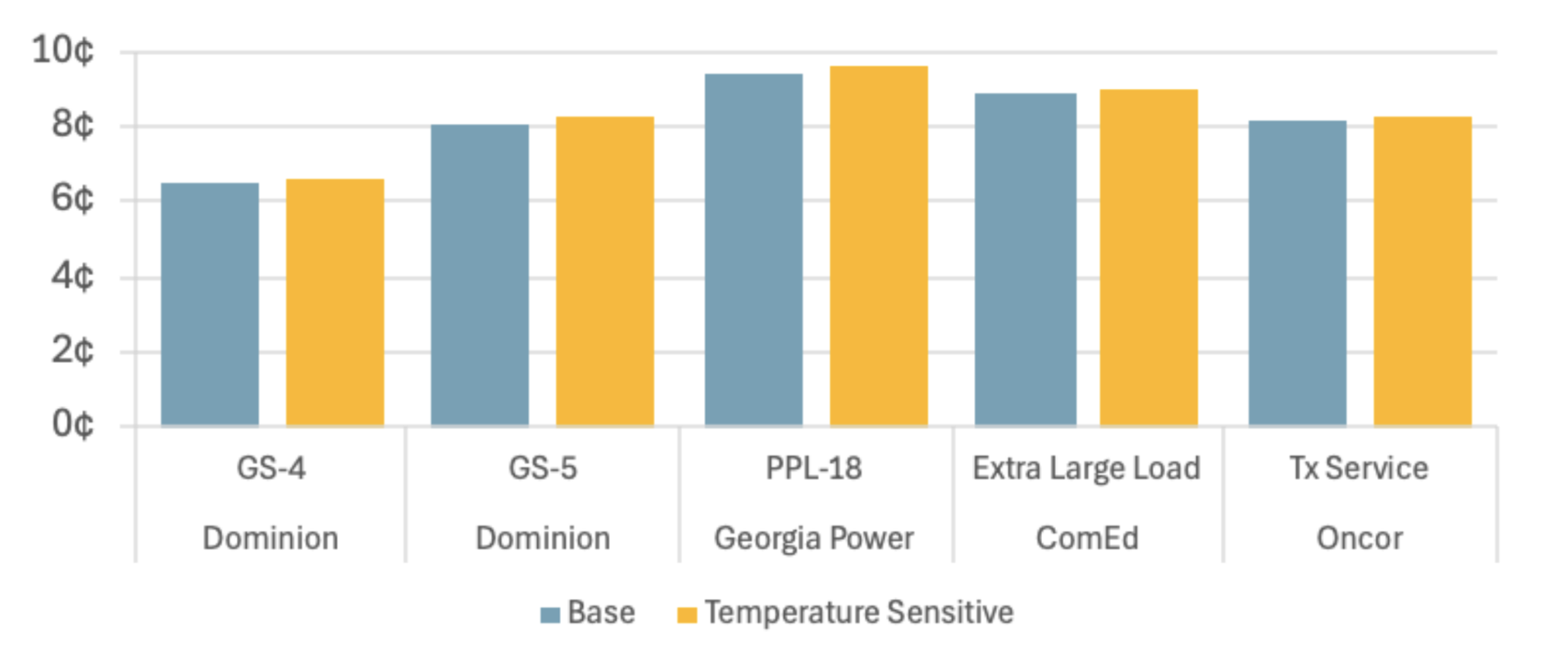
This study evaluates how large load tariffs translate into annual electricity costs for data center customers under realistic operating conditions. Numerous large load tariffs have been proposed or approved, often sharing common structural elements but differing in key design parameters. However, no prior analysis has systematically applied these tariffs to a standardized load profile to compare and benchmark electric bills. Using a representative set of tariffs that are currently in effect or recently approved, E3 models bills for a hypothetical 25 MW data center under two high–load-factor load shapes. The results show that customer costs differ materially across tariffs, driven by differences in demand charges, energy charges, minimum billing provisions, and exposure to wholesale market prices
Figure 1 Annual Bill in $MM/year for Identical Load Shapes
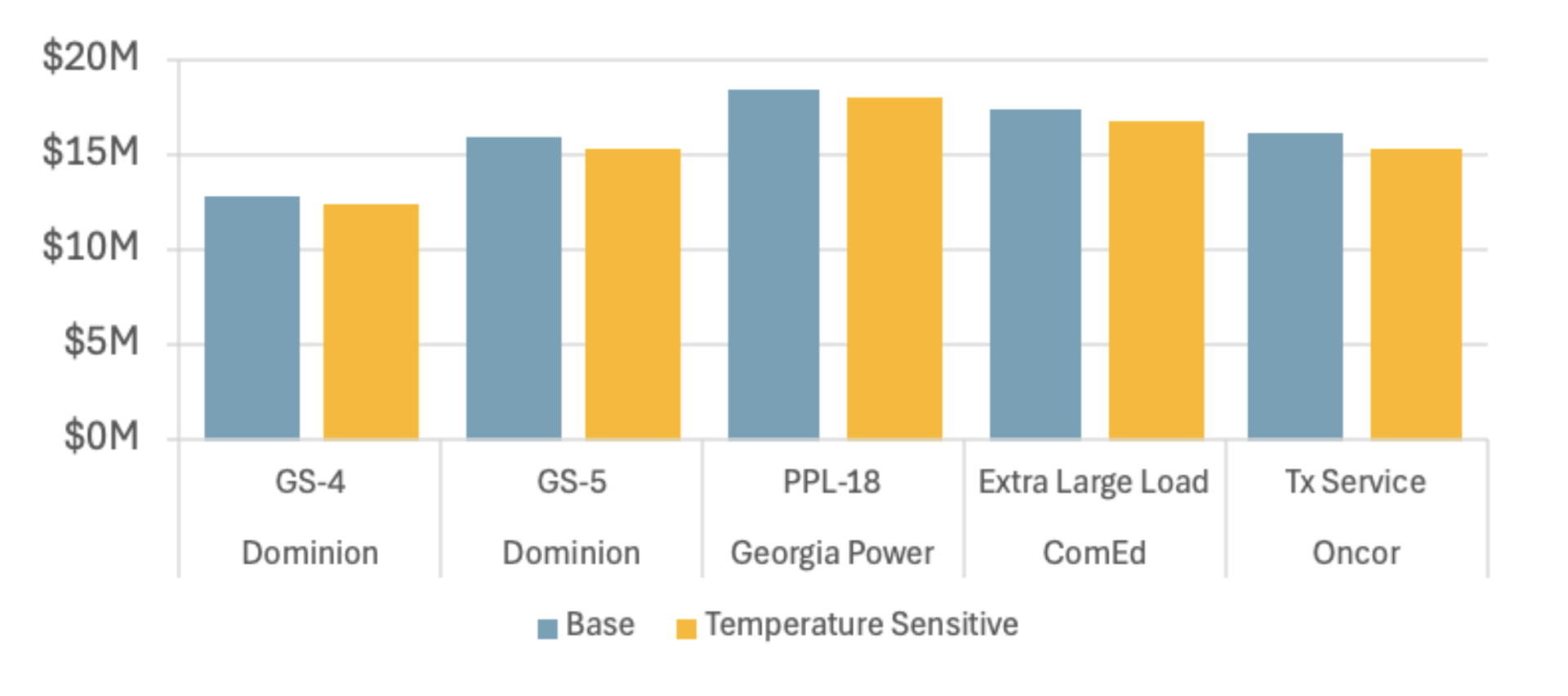
Figure 2 Annual Bill in ¢/kWh/year for Identical Load Shapes
Tariffs with minimum demand or contract capacity requirements can lead to high costs during ramp-up periods, while tariffs without such provisions scale directly with realized load. In deregulated markets, lower utility charges may be offset by greater exposure to wholesale price volatility. These differences have important implications for data center siting decisions, utility cost recovery, and regulatory oversight.
To support more transparent comparison, the paper introduces a standardized benchmarking framework for large load tariffs. The framework combines standardized load assumptions with bill-based cost metrics, charge composition analysis, infrastructure cost recovery treatment, and regulatory context to translate diverse tariff designs into comparable cost and risk indicators.
A standardized benchmarking framework benefits all stakeholders. Utilities can assess tariff design choices and demonstrate cost causation. Data center customers gain clearer insight into cost drivers across potential sites. Regulators and policymakers can more effectively evaluate cost responsibility and cross-subsidization. As large load growth continues to evolve, a consistent benchmarking framework provides a practical foundation for informed decisionmaking in an increasingly complex electricity landscape.
Source: Halcyon

Write a comment
Các trường bắt buộc được đánh dấu *