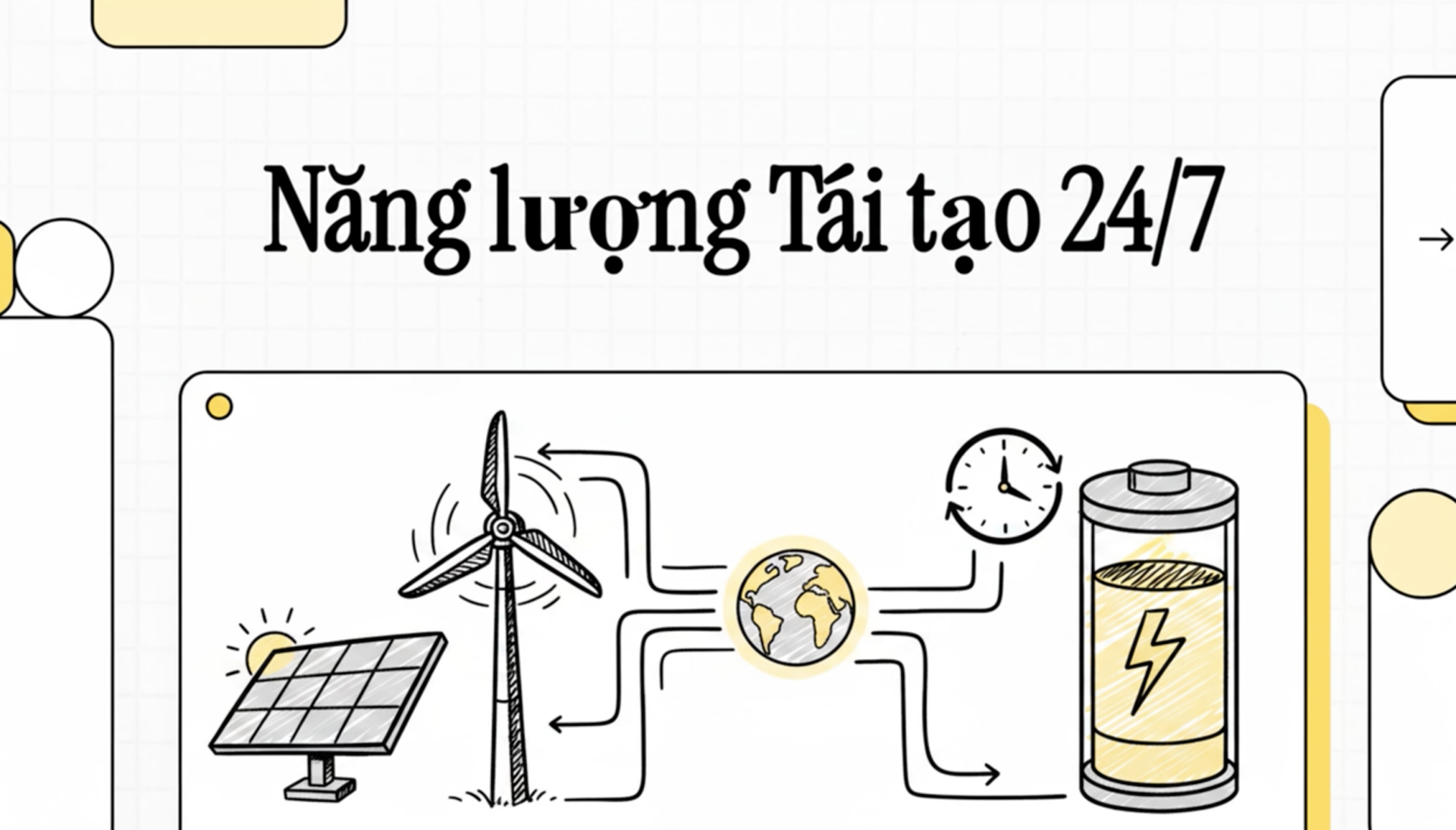
Overview As solar and wind have become the cheapest sources of new electricity generation globally, the central challenge of the energy transition has shifted from managing variable output to ensuring clean electricity is available whenever and wherever it is needed. Delivering reliable, 24/7 renewable power requires moving beyond isolated assets toward hybrid systems that combine solar PV, onshore wind, and battery energy storage systems (BESS).
Key Findings
- A New Metric: Firm LCOE (F-LCOE): Traditional Levelised Cost of Electricity (LCOE) only captures plant-level generation costs. IRENA introduces the "Firm LCOE" (F-LCOE) to account for the additional capital required to achieve a specified reliability target (e.g., 90-95%) via storage, generation overbuild, and complementary renewables. F-LCOE reflects the true cost of delivering a flat, continuous round-the-clock clean electricity supply.
- Plummeting Costs & Fossil Fuel Parity: Driven by massive cost reductions—solar PV down 87% and BESS down 93% between 2010 and 2024—firm renewable electricity is now crossing the threshold of cost competitiveness with new fossil fuel generation. In China, firm solar-plus-storage already costs less than new coal-fired generation. Globally, the F-LCOE for wind-plus-storage is projected to fall from USD 88–94/MWh in 2025 to USD 49–75/MWh by 2030 across markets like Brazil, Germany, and Australia.
- The Power of Hybridisation and Overbuilding: The most cost-effective firm renewable systems leverage the natural complementarity of solar and wind generation, significantly reducing the duration and depth of energy shortfalls compared to either technology firmed in isolation. Furthermore, building excess renewable generation capacity (overbuilding) is often much cheaper than massively expanding expensive battery storage to bridge extended low-generation periods (Dunkelflaute).
- Speed of Deployment and Energy Security: Beyond cost competitiveness, hybrid renewable systems offer a strategic advantage in deployment speed. They can typically be developed and commissioned within 1 to 2 years, whereas new gas or nuclear plants face lead times of 5 to 7 years. Additionally, they insulate economies from fossil fuel price volatility and supply chain disruptions.
Looking Ahead Achieving 24/7 clean power at scale will depend on the continued commercialization of Long-Duration Energy Storage (LDES) technologies, the development of cross-border grid interconnections, and the deployment of digital flexibility via Virtual Power Plants (VPPs). Policy frameworks and new market mechanisms (such as 24/7 hourly matching standards for Scope 2 emissions) are actively reinforcing the investment case for round-the-clock clean supply
From these key informations, iSEAR has curated and synthesized them in the video below.
Source: IRENA
Write a comment
Các trường bắt buộc được đánh dấu *